
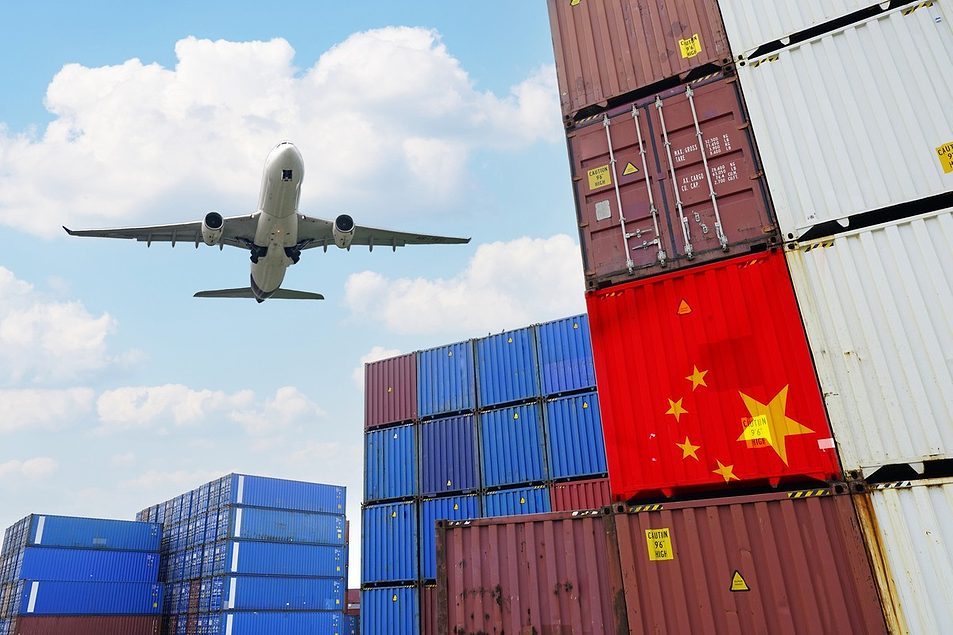
For decades, global manufacturing operated on a simple concept: lean efficiency through geographic concentration. China became the undisputed factory of the world because it offered low cost, huge skilled labor availability, technical knowhow and well-connected infrastructure.
Starting around 2018, that model began to crack. The escalating U.S.-China trade war and implementation of Section 301 tariffs suddenly made cost efficiency mathematically impossible for many imported goods. Then came the COVID-19 pandemic, resulting in factory lockdowns, port closures and logistics bottlenecks that paralyzed global production. A single missing component could halt a multi-billion-dollar consumer electronics product line.
In response, major technology and manufacturing companies panicked, and the “China Plus One” strategy was born.
At its core, China Plus One was a risk-mitigation strategy. The goal was to avoid total dependency on Chinese manufacturing by moving production to alternative geographical locations, most notably Vietnam, India, Mexico and Thailand. In the process, companies could avoid the tariffs and not get caught with all their eggs in one basket again.
The urgency made sense, but the execution was flawed. Many companies took the path of least resistance, creating the illusion of diversification without removing the risk. Some simply relocated the final step of the process instead of building new supply chains. Following are the most common examples of what they did:
Relocation of final assembly only. Many moved the last few screws of assembly and packaging to a facility in Vietnam or Mexico, just to change the country-of-origin label and avoid U.S. tariffs. However, 90% of the bill of materials was still manufactured in, and shipped from, China. If a border closed, production still stopped.
Use of same sub-tier suppliers. Companies opened new factories in India or Thailand but failed to find new sub-tier suppliers in that region. They often relied on the exact same tier-2 and 3 component vendors who had simply set up satellite warehouses near the new assembly plant. They changed physical geography, but the single-point-of-failure dependency remained the same.
Lack of evaluation of technical capabilities. Companies incorrectly assumed that contract manufacturers in emerging markets possessed the same technical capabilities as China. They moved purchase orders, expecting immediate high-yield production, only to discover that the new region lacked precision tooling, computer numerical control (CNC) capabilities, or advanced surface finishing required for premium consumer electronics.
On paper, these companies told their shareholders they were diversified. Operationally, their supply chains were just as fragile; only now they were managing longer, more complex and more expensive cross-border logistics.
True resilience cannot be achieved with a single factory move. It’s an operational discipline. To move past the illusion of “China Plus One,” supply chain leaders need to adopt a new framework. Following is what they must start doing now:
Map the sub-tier dependencies. Organizations must push visibility past their direct tier-1 suppliers. They need to know where raw materials, specialty chemicals and engineered components are originating. If three newly “diversified” suppliers all buy their rare earth materials or precision metals from the same upstream processor, you haven’t mitigated your risk.
Drive vertical integration in the “plus-one” hub. Stop fragmenting the supply chain across borders. If you select India or Vietnam as a manufacturing hub, you must aggressively drive vertical integration within that specific country. Co-locate your raw material processing, component manufacturing and final complex assembly within a tight geographic radius to eliminate cross-border choke points.
Treat diversification as a technology transfer, not procurement. You can’t build a new global footprint using purchasing teams alone; you need manufacturing architects. Companies must be willing to act as first-movers. This means putting engineers on the ground, investing in supplier capital expenditures, building technical capabilities, and actively training local workforces to meet stringent global standards.
For years, global supply chains were optimized around cost. Today, they must be optimized around resilience. The companies handling global disruption most effectively today are the ones that are quietly doing the hard work: mapping sub-tier dependencies, investing heavily in local supplier capabilities, and physically engineering vertically integrated ecosystems from the ground up.
Kaushik Krishnan is a global manufacturing architect and senior supply chain executive for a Fortune 5 technology leader.