Hidden Supply Chain Risks

August 10, 2026

Hidden Supply Chain Risks

NPA Insights, August 2026

Hi all!


The surge in AI demand is creating a hidden supply-chain risk: major cloud providers are buying most semiconductor wafer capacity to make high-bandwidth memory (HBM) for AI servers, leaving less for consumer devices. This drives big price hikes and longer lead times, risking product delays and higher costs.


To manage this, companies should secure long-term contracts, diversify suppliers and regions, increase safety stock, recover memory from retired IT gear, and improve efficiency through better system design. They must also monitor permitting and local factors that affect where new factories and data centers can be built.


With few suppliers and slow fab expansions, supply-chain exposure is growing. Adding memory-focused controls to procurement and logistics now can reduce shocks and keep production steady.

AND NOW SOME OPERATIONS NEWS

The State of Manufacturing

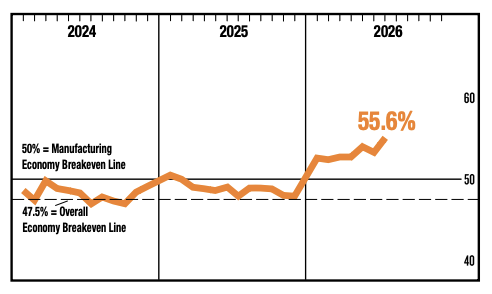
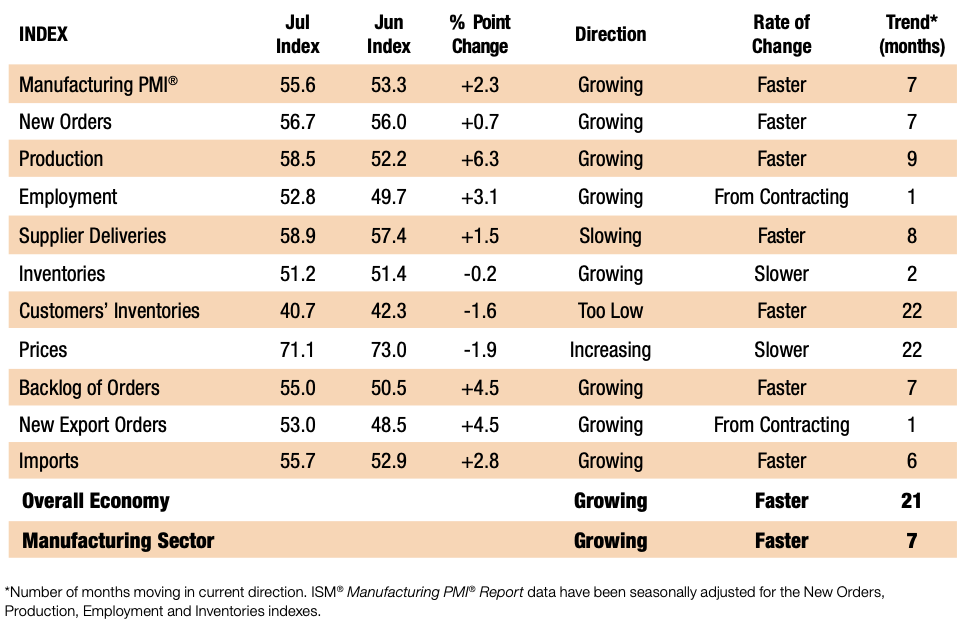
The U.S. manufacturing sector expanded in July for the seventh consecutive month after a 10‑month contraction, with the reading at 55.6, up 2.3 percentage points from June.

The New Orders Index expanded for a seventh straight month after four consecutive months in contraction, rising to 56.7%, up 0.7 percentage point from June's 56.0%.


July's Production Index was 58.5%, 6.3 percentage points higher than June's 52.2%.

When the next supply shock hits, many CEOs are already reaching for their wallets.


Proxima asked 515 leaders at companies with more than $500 million in revenue how much they’d pay to keep their businesses running when supply chains wobble. The answer was striking: 72% said they’d accept supplier costs rising more than 10% for better resilience.


But willingness hasn’t yet become readiness. Most executives say they’ve tested disruption plans, yet only 13% believe their companies could keep revenue and deliveries intact for more than three months after a major event. More than half admitted they wouldn’t last beyond three weeks. And when asked about a two‑week outage among their top suppliers, many estimated it could put 11–40% of revenue at risk.


AI and automation are helping; about half of CEOs see measurable value in AI for risk monitoring and procurement; but data quality, skills gaps, and slow procurement processes are holding firms back. Cyber incidents are already a real pain: nearly half reported a supply‑chain disruption from a cyberattack in the past two years, while only a third have real‑time visibility into supplier cyber risk.


The story is clear: leaders are ready to pay for resilience, but must now invest strategically in supplier diversification, verified data, faster procurement, and cyber visibility to turn intent into protection before the next crisis arrives.


STARTUP STUFF

There was no summer slump when it comes to Boston's venture-backed headlines...


Cambridge-based Walden Robotics, a full‑stack Physical AI company that builds and deploys general‑purpose robots that continuously learn and improve while doing real work, emerged from stealth with $300 million in funding.


Biotech firms, Foray Bioscience and Silvabio, partner to breed blight-tolerant chestnut trees with longterm viability.


Lydian closed a $43 million Series A round led by Breakthrough Energy Ventures to deliver cost‑competitive synthetic aviation fuel at commercial scale.

Join Adam Beck, URF’s Global Head of Urban Planning, as he leads a panel on “Preparing for Robots in Public Spaces from an Urban Planner’s Perspective” via Zoom on August 11th at 10AM EST.

NESCON is a one-day, virtual conference for supply chain professionals, featuring educational forums on economic trends, leadership development, procurement strategies and tools, and operations/logistics solutions. This year’s event takes place on October 5, 2026.

PV Magazine USA’s annual multi-day virtual event examines key trends in U.S. solar and energy storage, including domestic manufacturing, distributed energy, and clean energy’s role in the AI-driven economy. This year it takes place October 20-22. Learn more here.

OUR MONTHLY SURVEY

Due to growing supply-chain challenges as a result of the high demand for memory chips, we’d like to know:

What would you prioritize to manage price hikes & longer lead times for high-bandwidth memory?
ICYMI

Which is a bigger methane source: cow belching or cow flatulence?


BothAreUdderlyHorrible

(Source: NASA)

Hector the Convector is a punctual thunderstorm in Australia. Wait, what?


ThunderDownUnder

(Source: BBC)

Robot dogs with Musk and Zuckerberg heads roam around Berlin museum in a new Beeple exhibit.


BeepBoopBark

(Source: NBC News)

Cheers,

Jurgen

Was this email forwarded to you?

Sign up HERE

Need a Procurement, Engineering, or Manufacturing Project done?

Interested in sponsoring this newsletter?

Facebook  Twitter  Instagram  Linkedin