
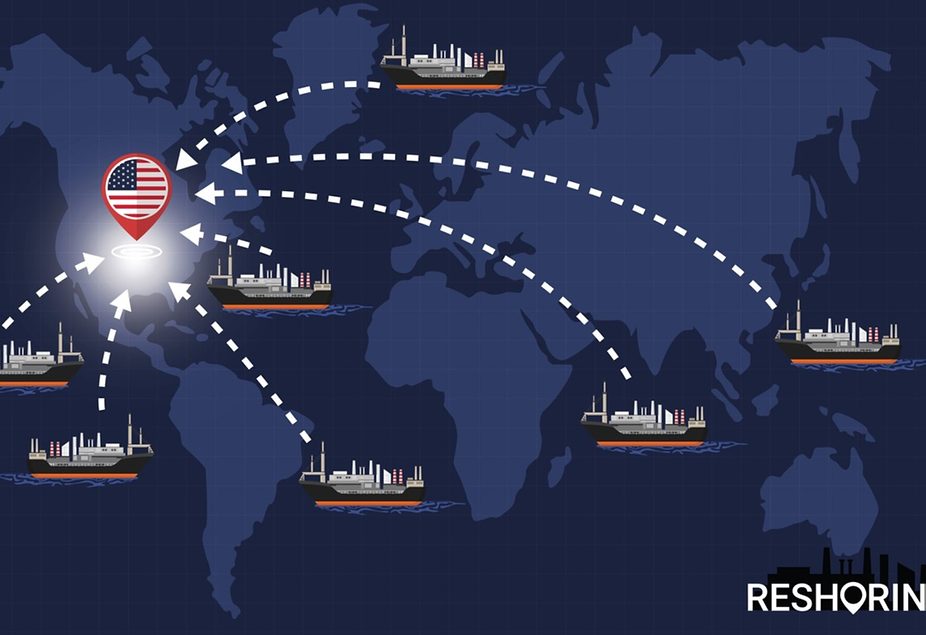
The CEO of a $200-million automotive supplier celebrated landing a major contract that required domestic production. Six weeks later, he was in a state of panic. The company’s 15-year veteran production manager, who had run offshore operations for over a decade, was making rookie mistakes; quality issues were piling up, and compliance costs were spiraling. Some of the best people had even started updating their LinkedIn profiles.
The company knew that tariffs were coming. All it thought that it needed was to establish new vendors and supply chains domestically — like flipping a switch.
Countless executives are failing to understand that “supply chain” isn’t just a terminology on a corporate flowchart. Hidden behind those neat boxes and arrows are hundreds of people, years of established relationships, institutional knowledge built over decades, and complex human networks that allow everything to run smoothly. In the case of the auto supplier, it required a comprehensive change-management plan, one focused on transitioning people alongside supply lines.
Everyone saw the economic signals of the new administration from a mile away, and made the logical decision to onshore manufacturing. Companies had months to prepare, and many started making supply chain decisions as soon as late 2024, confident that their operational expertise would seamlessly translate to domestic operations.
This false comfort of “We had domestic production before; we can do it again” led to a tremendous underestimation of the need for human transformation. Manufacturing has changed a lot over the past decades, and so have people and their skillsets. They cannot be replaced as quickly as supply lines. So when you ask a production manager who has spent a decade building relationships with vendors and suppliers in Shenzhen to establish the same all over again in Ohio, you’re invalidating someone’s professional identity.
Here’s the kicker: This entire crisis was completely avoidable with proper change-management planning. A manufacturer might invest $10 million in domestic production capabilities, then lose its best engineers because nobody bothered to help them process the fact that their offshore expertise was suddenly obsolete.
In a time of radical change, the companies that will succeed are the ones that skip the corporate cheerleading. Their leaders don’t pretend this is exciting. They say, “This is hard, we’re going to struggle, but we’re going to do it better than our competitors because we have to.” That honest acknowledgment of difficulty is where successful change management starts.
What follows is an enterprise-wide change-management blueprint for manufacturing onshoring.
Confront the reality with an honest risk assessment. One of the most successful manufacturing reshoring initiatives in recent times is when General Electric moved its appliance production from China to Louisville, Kentucky. Rather than treating it as a matter of simple logistics, the company implemented a comprehensive change-management program and invested heavily in retraining programs to support its workforce transition. Included was a thorough assessment of new domestic supplier requirements and their workforce capabilities. This honest assessment allowed GE to adjust expectations and allocate resources that ultimately saved millions in ad hoc fixes, while maintaining production quality throughout the move.
There are going to be fundamental differences between international and domestic supply chain management styles. Your team’s expertise in managing things smoothly across time zones and cultural barriers isn’t going to automatically translate to navigating domestic vendor relationships, regulatory requirements and quality standards. You must give it time, resources and, most importantly, training to handle this shift.
Break down silos that kills transition. If there’s one reason that derails most transition initiatives, it’s communication — or rather the lack of it. When you’re reshoring your entire supply chain, clear inter-departmental communication isn’t just important; it’s the difference between success and catastrophic failure.
Leadership must establish transformation communication protocols — structured channels that prevent the isolation and confusion that destroys reshoring efforts. Think in terms of daily cross-functional check-ins during critical transition phases, weekly all-hands updates that acknowledge both progress and setbacks, and monthly strategic alignment sessions where frontline insights actually inform executive decisions. Yet communication protocols aren’t just about meetings — they’re about giving employees the time and space to build relationships with the domestic suppliers and partners they’ll be working with in fundamentally different ways.
Imagine that your IT department implements a new automation system without consulting with the production team that’s still grappling with the loss of their offshore relationships. Because of this small misalignment of team priorities, you’ve created the perfect condition for resistance and dysfunction.
The most successful reshoring efforts are by leaders who become communication orchestrators, not just decision-makers. They create feedback loops that flow both up and down the organization, ensuring that the production manager’s concerns about domestic supplier quality reach the C-suite, while strategic decisions about timeline adjustments reach the factory floor with context, not just directives.
During reshoring efforts, when teams are already navigating emotional and operational upheaval, communication breakdowns trigger a domino effect of failures across the organization. Siloed decision-making can create disruptions and cost millions in duplicated efforts, incompatible systems, emergency fixes and lost productivity. Worst of all, it compounds the psychological stress on teams who are already processing significant professional loss, accelerating the talent exodus that can cripple your transition before it gains momentum.
Prioritize honesty over cheerleading to enable transition. The traditional change management approach is that of cheerleading, creating a sense of enthusiasm and excitement for the change to come. Unfortunately, it fails spectacularly for reshoring scenarios. Why? Because you’re managing an unwanted change that invalidates years of hard-earned expertise.
You’re dealing with human grief. If you force such changes on people without acknowledging the emotional reality, you get sabotage disguised as competence. Trying to build excitement will most likely create more resentment within workforces.
What you need instead is cross-functional grief-processing teams. That doesn’t mean people sitting in a circle, holding hands, and singing songs, but a place where they can be honest: “This sucks! But we’re in it together, and we’ll get through it together.”
Honest acknowledgement goes a long way toward boosting morale. At the same time, success metrics should be re-defined to avoid punishing teams for inherent higher costs, initial inefficiencies, mistakes and failures. Acknowledging difficulties rather than cheerleading will build better trust among your workforce.
Adopt human-focused technology. When companies integrate advanced automation, robotics and artificial intelligence into their domestic operations, there’s a tendency to focus solely on technical implementation. This is where most businesses make a critical mistake.
The most successful reshoring efforts treat technology adoption as a human transformation challenge first, and a technical implementation challenge second. This means involving the people who will work with advanced AI from day one.
When your production team understands that new automation will augment their transition to domestic operations, resistance can transform into collaboration. When floor managers have input into how AI systems are configured and deployed, they may become champions rather than saboteurs.
A human-centric technology adoption gives your workforce the time and training to adapt to AI-powered quality control systems or robotic automation, without comparing their initial performance to the offshore benchmarks they spent years perfecting. The companies that understand this don’t just implement better systems; they retain the institutional knowledge and experienced personnel that make those systems effective.
There’s cause for hope. The companies that master this human transformation won’t just survive the reshoring wave — they’ll emerge as the dominant players in American manufacturing’s next chapter. While their competitors struggle with talent exodus and operational chaos, these organizations will have built something powerful: a workforce that’s not just adapted to domestic operations, but has become expert at navigating change itself.
The reshoring crisis is creating a once-in-a-generation opportunity to build manufacturing organizations that are fundamentally more resilient, agile and human-centered than what came before. The companies that invest in comprehensive change management today are building the competitive advantage that will define the next decade of American manufacturing.
The question isn’t whether you’ll be forced to reshore. It’s whether you’ll use this moment to build something better than what you had before.
Sondra Leibner is managing director of consulting at alliant.