
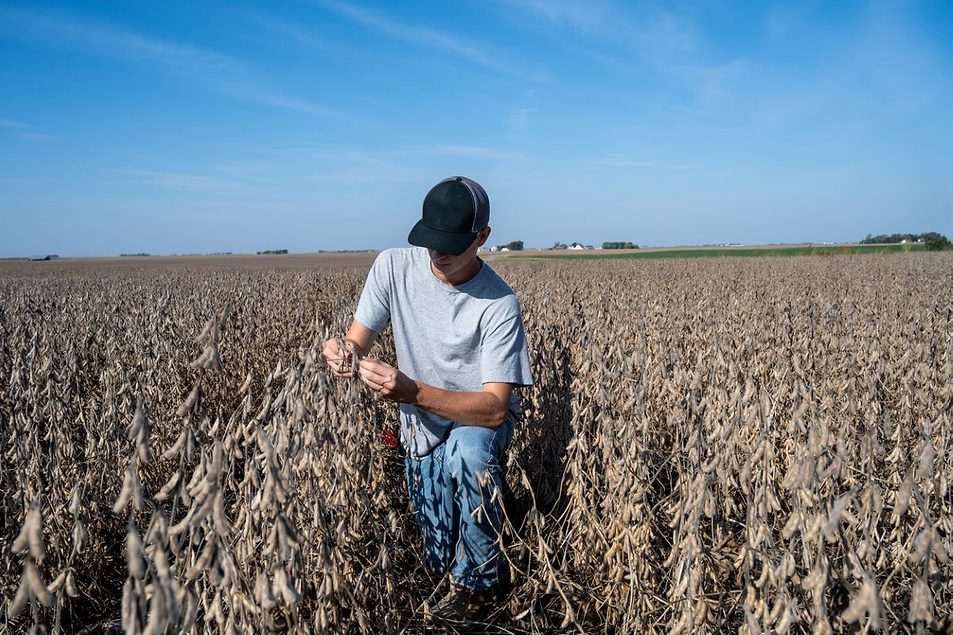
U.S. farmers are set to receive $12 billion in aid, from a Farmer Bridge Assistance program announced December 8 by President Donald Trump, aimed at countering the effects of low crop prices and the administration’s ongoing trade wars.
The FDA said in a press release that the “one time bridge payments” would relieve U.S. farmers from “unfair market disruptions,” that include what it characterizes as temporary trade market disruptions and increased production costs that are still impacting farmers “following four years of disastrous Biden Administration policies that resulted in record high input prices and zero new trade deals.”
BBC News says that most of the money — $11 billion — is earmarked for one-time payments to farmers for row crops such as corn, cotton, peanuts, sorghum, soybeans, wheat and canola, with another $1 billion reserved for crops not covered by the program.
Trump also claimed in the December 8 statement that the One Big Beautiful Bill passed earlier this year will provide greater relief for farmers when its economic measures kick in on October 1, 2026.
While farmers have broadly supported Trump, the agriculture sector has been severely disrupted by trade disputes during his second term, particularly with China. It also faces a water shortages caused by climate changes, and a looming crisis over available workers.
Big Trouble in China
China, the greatest importer of U.S. sorghum and soybeans, earlier this year had drastically reduced purchases of these commodities as part of their trade dispute with the Trump administration. That’s a problem, because the U.S. agricultural sector relies heavily on exports. According to the American Soybean Association, in the marketing year 2022/2023, the U.S. exported 2.21 billion bushels of soybeans, or 52% of total production, the majority of it to China, and mostly for animal feed. Meat consumption in China is rising as incomes increase, so soybean imports will also swell, but there are plenty of alternative sources.
China recently pledged to buy more U.S. soybeans at a trade summit between Trump and President Xi Jinping in October in Busan, South Korea, even though the cargoes are priced higher than rival Brazilian offers, according to Reuters. At that time, China committed to buying at least 12 million metric tonnes of U.S. soybeans by the end of 2025, followed by 25 million metric tonnes annually for the next three years. But, so far, China — which has a track record of reneging on import volume agreements with the U.S. — has only purchased approximately one-quarter of that amount, says the BBC. The drop in exports has been “potentially devastating for American farmers,” according to American Progress, an independent, non-partisan policy institute.
Watch: Soy Markets Are Experiencing the First Shocks of the Global Trade War
“Maximizing domestic farm production is a big part of how we will make America affordable again and bring down grocery prices,” Trump said. It’s unclear how the U.S. food market would absorb more than half of current production of the grain and bean commodities it typically exports. However, soy oil is a major feedstock for biodiesel and renewable diesel, something the Trump administration has encouraged via a proposed boost in U.S. biofuel mandates through 2027.
In June, the U.S. Environmental Protection Agency proposed to increase the amount of biofuels that oil refiners must blend into the nation’s fuel mix in 2026 and 2027, driven by the mandates and measures to discourage biofuel imports. According to an undated statement from the U.S. Department of Energy, bioenergy can “contribute to a more secure and economically sound future by providing domestic energy sources, reducing U.S. dependence on foreign oil, generating U.S. jobs, and revitalizing rural America.”
Water is a Problem Too
Also on December 8, Trump threatened to hit Mexico with an additional 5% tariff in a row over water supplies to U.S. farmers. At issue is a more than 80-year-old treaty and other agreements that guide how the two governments share flows of the Rio Grande and Colorado Rivers. For decades, the U.S. has accused Mexico of not meeting the terms of the agreement, while Mexico has cited drought conditions.
Meanwhile, drought, increased temperatures and decreased snowpack in the Rocky Mountains have strained the water supply from the Colorado River to seven states covered by the 1922 Colorado River Compact — Arizona, California, Colorado, Nevada, New Mexico, Utah, and Wyoming — also hampering agriculture. With this and several other key water-management agreements set to expire this year, those states are renegotiating the terms of use for the water.
Where are the Workers?
Meanwhile, American agriculture faces a critical shortage of labor that is harming annual harvests, animal agriculture production and processing facilities, according to the National Association of State Departments of Agriculture. “This damages American competitiveness and overall food security,” NASDA said in a February 19 statement.
Already-existing problems such as an aging domestic workforce and migration from rural areas to cities have been exacerbated by the Trump administration’s dramatic clampdown on people working without legal permission to do so. This has had an outsized effect on agricultural, as some 70% of seasonal agricultural workers are foreign-born, and 50-60% of those have no legal status, according to the USDA.
In June, Trump issued a directive that walked back strict enforcement on agricultural workers, acknowledging that “our farmers are being hurt badly (sic),” and was applauded for doing so by agricultural bodies such as the National Potato Council. But, days later, he reversed course, and it became clear that enforcement by Immigration & Customs Enforcement (ICE) agents would continue to be as disruptive as in any other industry. In October, ABC News reported that the U.S. Labor Department is warning of a potential food crisis linked to immigration raids, some targeting workers with legal work visas.
All the same, the reaction from farmers to the financial relief was mostly positive. “Farmers are grateful to President Trump and Secretary Brooke Rollins for providing resources that, for many, could make the difference between staying in business to plant another crop, or shuttering a family farm,” said American Farm Bureau Federation President Zippy Duvall, in a statement December 8. “We appreciate that Congress addressed many economic challenges in legislation earlier this year, but many farm program improvements will not kick in until next year. The assistance announced today will make an immediate impact.”
But some called for deeper structural reform to U.S. agricultural policy. National Farmers Union (NFU) President Rob Larew said, “Short-term payments, while important, are only a first step. What we truly need are long-term structural fixes that restore viability and stability to family farms and ranches for generations to come… Input costs remain high, trade relationships are uncertain, access to affordable healthcare is in danger and the stress on rural communities continues to grow.”