
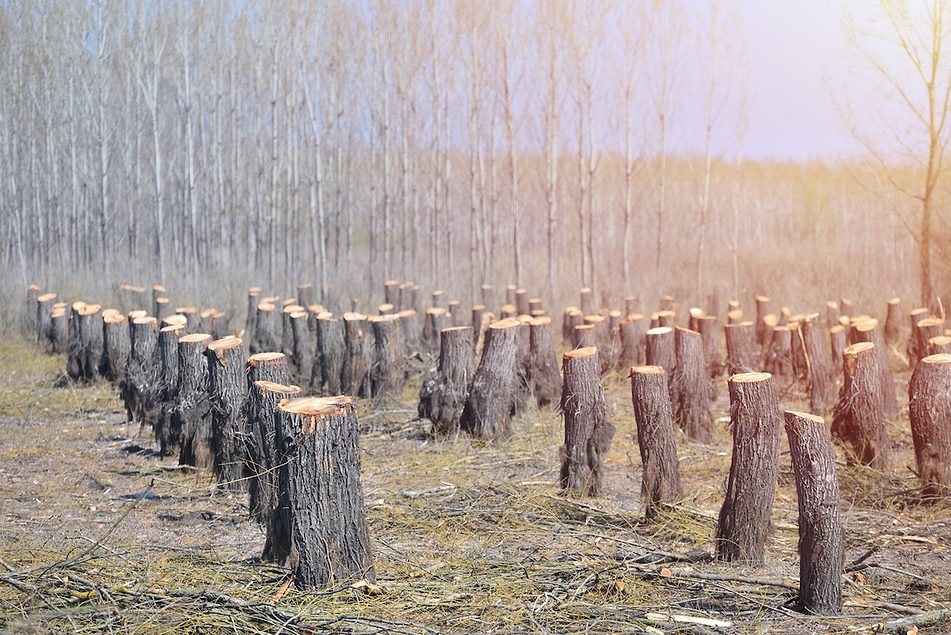
The European Commission’s decision to move forward with the EU Deforestation Regulation (EUDR) is a welcome course correction — and a reaffirmation of Europe’s commitment to protecting the world’s forests and building resilient supply chains. While some grace periods remain, including a six-month delay to penalties and extended timelines for smaller businesses, the direction is clear: Deforestation-free supply chains are the new business standard.
The EUDR represents a pivotal moment in global efforts to halt forest loss, and not a moment too soon. In 2024, tropical forest loss reached alarming highs. The world’s last primary forests are under mounting pressure from the climate crisis and expanding commodity supply chains, including textiles, packaging and construction. The regulation shines a light where it’s most urgently needed: on forest-based supply chains and the need for traceability, transparency, and a decisive shift away from degradation.
Until recently, few brands could trace the sourcing of man-made cellulosic fibers (MMCFs) like viscose, which are derived from forests. Brands might have known the producer and country of manufacture, but rarely the specific forest of origin. This opacity increased the risk of sourcing from high-carbon forest environments. Without proper visibility, brands were left navigating blind, unable to align procurement with climate commitments, or avoid deforestation risks.
That reality is changing, and the EUDR is helping to set a new standard. A shifting regulatory landscape, rising consumer expectations, and corporate climate goals have made low-risk forest products a must-have. Although the EUDR does not yet cover MMCF textiles, it clearly establishes the direction of travel for future policy and signals the importance of assuring that forest-derived products do not accelerate forest loss. EU policymakers should resist attempts to weaken the law’s ambition and instead expand its scope to include forest-based textiles.
The fashion sector is not starting from zero. Tools such as TextileGenesis’ digital traceability platform and Forest Stewardship Council (FSC) certification have provided strong frameworks for transparency. Canopy’s Hot Button Report, which independently assesses 98% of global MMCF production, offers detailed data on producer performance — from low-risk sourcing and supply transparency to innovation in forest-free fibers and conservation contributions. These resources already provide much of the infrastructure needed for EUDR-style compliance.
The results are promising. Dozens of producers now disclose sourcing data, have eliminated high-carbon forest inputs, and are investing in next-generation textiles made from recycled fabrics and agricultural residues. If fully scaled, these circular alternatives could divert more than 30 million tonnes of textile waste from landfills within a decade — roughly equivalent to seven Great Pyramids of waste avoided.
Still, voluntary action alone will not achieve the transformation required. The EUDR’s risk-based approach and strict traceability requirements give companies a clear incentive to understand and improve their supply chains, raising the bar for laggards and rewarding leaders. Once the current grace periods end, we expect that the regulation will be implemented in full. Doing so will deliver its full potential, strengthen Europe’s materials resiliency, and maintain Europe’s credibility as a climate leader.
For fashion, the message is clear: Move beyond broad pledges toward verifiable data on fiber sourcing. That means tracing the wood pulp, mapping sourcing regions, and engaging directly with suppliers. The Hot Button Report already serves as a strong foundation for due diligence, and a practical screening tool for EUDR alignment.
The European Commission has taken a decisive step in restoring confidence and direction to sustainable markets. Now, the opportunity is to accelerate — to mobilize new investment, scale next-gen materials, and make forest protection a cornerstone of resilient, future-fit business.
Nicole Rycroft is founder & executive director of Canopy.