
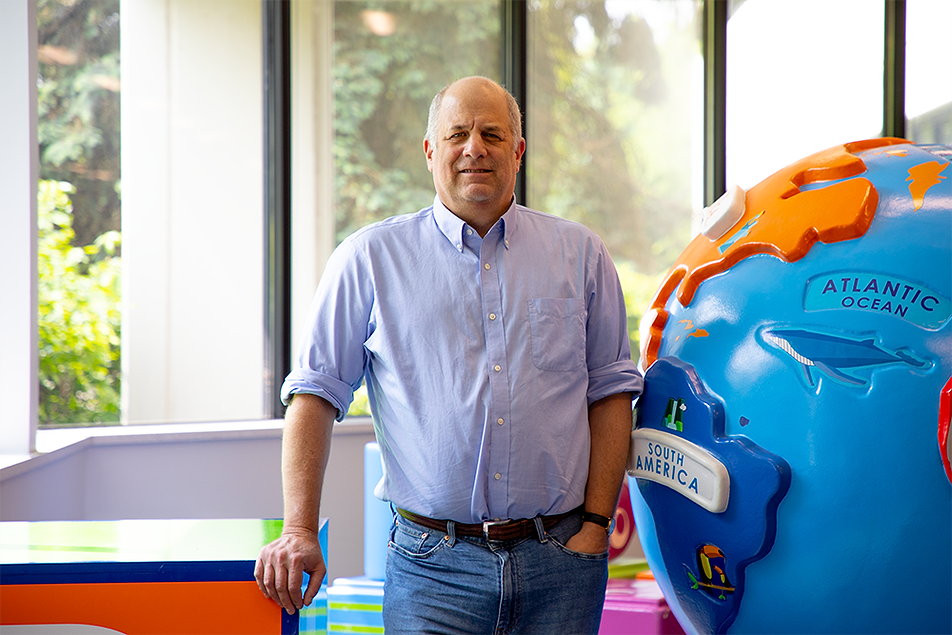
You might think Rick Woldenberg would be happy, having received all the refunds his company applied for (so far) against the International Emergency Economic Powers Act (IEEPA) tariffs it paid in 2025, now deemed illegal. Learning Resources even got interest on those payments. But, “the damage has been done,” he says. “It will take a long time to restore ‘normalcy.’”
Learning Resources, a manufacturer of educational toys based in Vernon Hills, Illinois, still pays other tariffs on imports, under Section 122 of the Trade Act of 1974, currently at 10% (but given to unpredictable variations.) On the whole, CEO Woldenberg sees “nothing good,” in the tariffs. “The impact of tariffs is no different than any other heavy or asphyxiating tax. It is a huge cost that must be covered. We have no way to defray it other than by raising prices,” he says. “It eats up our cash and distracts our team. It impairs our ability to grow and remain profitable. It makes it harder for our dealers to sell our products and make a market for our brands.”
Read More: SCOTUS Ruling Likely to Cause More Tariffs, More Chaos, Experts Say
Woldenberg went unusually far in pressing his point, having been the lead plaintiff in a case against the IEEPA tariffs that went all the way to the Supreme Court, which ruled on February 20 that the tariffs were illegal and must be refunded. For a while, it looked like President Donald Trump would make the process of getting refunds deliberately difficult. But, in the end, U.S. Customs and Border Patrol augmented their already existing Automated Commercial Environment (ACE) system to include CAPE (Consolidated Administration and Processing of Entries), in order to process bulk refunds of tariffs.
CBP says it plans to implement CAPE through a phased development approach, adding more functionality in subsequent phases for more complicated scenarios. Phase 1 is limited to certain unliquidated entries and certain entries within 80 days of liquidation.
Even with Phase 1 ACH payments beginning to hit bank accounts, a substantial volume of IEEPA refund exposure remains tied up in the CAPE validation process, warns law firm Troutman Pepper Locke. The CBP expects to be addressing other entries in later CAPE phases, including entries under protest or currently excluded from Phase 1.
But, for Learning Resources, the process was “not onerous,” Woldenberg says. “It was mainly a process of gathering the (electronic) data and conforming it to the prescribed format. I feel CBP did a good job processing a lot of claims simultaneously, and acted in good faith to make the process as efficient and painless as possible.”
The company was already set up in the ACE systems, and so it did not take extraordinary effort to prepare the applications, Woldenberg explains. However, some of the company’s entries were not eligible for submission in Phase 1, he adds. “We’re not done yet.”
Regarding the ongoing, uncertain environment of tariffs on imports into the U.S., Woldenberg says the company has no plans to change is import tactics. “We are trying to run our business according to our strategy and business plans,” he says.
Trump’s tariff policy, ostensibly to rectify trade imbalances in order to benefit American businesses, did quite the reverse, as far as Woldenberg is concerned. “It was highly disruptive, caused our growth to reverse, caused our profitability to sharply reduce, forced a price increase that would not otherwise have occurred, was a major distraction and diversion of resources, and caused us to engage in litigation against the U.S. government at great expense,” he says.
Woldenberg says he was prompted to draw a line in the sand because he believed not only that the tariffs were unlawful and unconstitutional, but that they threatened the future of the company.
What was it like to take a case to the Supreme Court? “It was like a second job that was bigger than my regular day job,” says Woldenberg. “And a very, very important job.”