
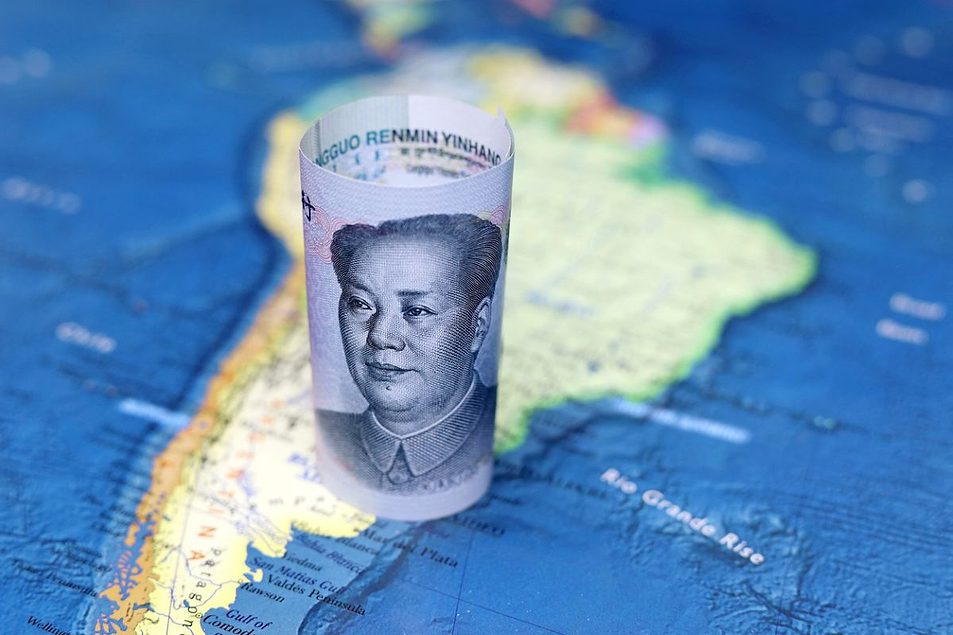
In the wake of Nicolas Maduro’s capture and the leadership transition underway in Venezuela, China’s role in Latin America has changed. Chinese financing, infrastructure and technology ties now factor into whether a transaction can be licensed, financed or politically defended.
For investors, this development raises the burden of explanation. In sectors tied to oil, ports, telecom, cloud infrastructure and critical logistics, regional companies need to show who controls the asset, who finances the project, who has access to data or revenue, and whether any Chinese-linked party creates exposure under U.S., European or local scrutiny.
Brussels is moving in the same direction, through the European Union’s Foreign Subsidies Regulation and tighter investment-screening mechanisms. Washington’s posture toward Venezuela adds a sharper lesson. Chinese exposure can now shape not just reputation, but whether a deal moves forward at all.
Regulators are no longer the only source of pressure. Journalists, activist shareholders, NGOs, whistleblowers and political actors increasingly shape how these relationships are understood and challenged. In this environment, Latin American companies should assume that any link to Chinese capital, direct or indirect, can become an issue across multiple fronts, especially now that Venezuela has made Chinese exposure a live test of alignment.
Investment Turns Into Scrutiny
The geopolitical ground beneath those deals has shifted. Deals that once passed quietly are now being questioned. Agreements that sailed through due diligence five or 10 years ago are being reconsidered under an entirely new lens. Washington has recalibrated its national security posture; Brussels is enforcing a stricter competition and transparency doctrine, and Ottawa, London, and Canberra have adopted more assertive investment screening regimes. Even within Latin America itself, several governments have begun reassessing the strategic implications of foreign participation in sectors tied to sovereignty, data and critical infrastructure.
A transaction that was purely “commercial” in 2018 may today trigger questions about cross-border data access, supply chain integrity, beneficial ownership or geopolitical alignment. As a result, Latin American institutions, whether state owned, publicly traded or privately held, are encountering pressure points far beyond their home markets.
Recent cases across the region show how quickly the temperature can change. In several instances, telecommunications providers have been pulled into Committee on Foreign Investment in the United States (CFIUS) reviews after indirect financing arrangements linked their data center infrastructure to Chinese investment vehicles. Financial institutions have faced sudden de-banking pressure from U.S. correspondent partners when a supplier or third party vendor appeared, without notice, on a restricted party list. And long-standing joint ventures have been quietly stalled after political shifts prompted regulators to reexamine earlier financing packages tied to Chinese infrastructure funds. None of these companies were the target; they became exposed anyway.
These risks are immediate. In many cases, the vulnerability stems from proximity: financial, contractual, technological or reputational. That alone can trigger a cascade of consequences, including enhanced scrutiny from correspondent banks, the quiet suspension of a public private partnership, or the abrupt delay of a key contract when a counterpart becomes politically radioactive almost overnight.
What’s increasingly clear is that proximity to Chinese capital, however distant or indirect, now carries a burden of explanation. Institutions that once viewed these partnerships as routine must be capable of articulating the nature of the relationship, the limits of access or control, the safeguards in place, and the strategic rationale. The ability to anticipate those questions and shape the narrative before it’s shaped by others largely determines whether a company maintains stability or finds itself managing a crisis that spirals beyond its control.
Litigation Isn’t the Only Battlefield
Legal proceedings and regulatory actions often dominate headlines, but the real conflict begins earlier, quietly, subtly, and in far murkier arenas. Adversaries no longer need a formal complaint to inflict damage. Anonymous tips can trigger preliminary inquiries. Leaked documents can reach journalists abroad. Political or commercial actors can quietly influence decision-makers inside ministries, banks, boardrooms or congressional offices.
In this environment, litigation becomes only one instrument in a much broader arsenal, frequently deployed after reputational harm has already taken hold. Who’s behind the pressure matters. Influence rarely travels in a straight line. A regulatory concern may originate with a competitor seeking to stall a project. A whistleblower allegation may reflect internal power struggles more than genuine misconduct. A sudden shift in scrutiny from a foreign government may align less with compliance and more with broader strategic positioning. Unpacking these dynamics, including regulators, political figures, journalists, board members, NGOs and financial intermediaries, is critical to understanding what’s happening, and why.
For entities exposed, directly or indirectly, to Chinese partnerships, these dynamics are even more pronounced. Anonymous tips about data-sharing arrangements with Chinese cloud providers have led regulators in multiple jurisdictions to initiate quiet preliminary inquiries. A leaked draft contract with a state-linked Chinese telecom vendor has, in several cases, reached journalists before it reached compliance officers. And in infrastructure deals, competitors have strategically amplified concerns about Chinese financing structures to influence ministry decisions or political coalitions behind the scenes. What begins as a commercial relationship can quickly migrate into a geopolitical flashpoint.
Equally important is the intelligence dimension of disputes. By the time a case becomes public, the narrative has often crystallized. Claims can circulate across jurisdictions even before they’re filed. Journalists may already have drafts in progress. Correspondent banks may be asking pointed questions. Identifying vulnerabilities early, validating evidence before it is challenged, and understanding the motivations of different actors can materially shape outcomes.
In an environment this interdependent, the difference between weathering a crisis and being engulfed by it lies in the work done before the headlines hit, before the first inquiry arrives, before the first allegation surfaces.
From Surveillance to Strategy
Defending against cross border risk today requires a strategic mindset, one grounded in investigative insight and an understanding of how power, politics and perception move across borders. Surveillance alone is insufficient. The challenge is not just identifying what’s being said, but who’s saying it, why they’re saying it, and what they stand to gain by shaping that narrative.
This is especially true when Chinese participation is part of the equation. Questions about beneficial ownership, data flows, supply chain dependencies and technical interoperability with western systems become geopolitical triggers. Once an institution is connected to a Chinese partner, however marginally, narratives can be shaped by actors who frame the relationship as a national security vulnerability.
In disputes involving cloud infrastructure, artificial intelligence=enabled analytics or cross border data storage, even minimal Chinese technical involvement can escalate a matter from commercial disagreement to national security concern.
This kind of insight requires integrating open-source intelligence, discreet human-source inquiries, digital forensics, financial tracing and geopolitical analysis. Only by understanding the full architecture of a threat before it materializes publicly can institutions respond with precision. This is true for sovereign governments preparing for arbitration, financial institutions responding to foreign scrutiny, or private companies unwinding sensitive partnerships.
In a region where legal processes can be weaponized, where political factions may exploit foreign investment for domestic leverage, and where scrutiny can emerge simultaneously from Washington, Brussels, Beijing, and local regulators, visibility becomes power. Early insight is the difference between a controlled response and a crisis that metastasizes across jurisdictions.
The Year Ahead
The pressures facing Latin American companies today are only a preview. In the coming year, the landscape will become even more complex, shaped by shifting supply chains, new enforcement authorities and a global race to regulate strategic technologies.
Much of this regulatory expansion will center on Chinese-linked technologies and capital flows. Outbound investment screening in Washington is being designed with Chinese advanced technology exposure in mind. EU investment screening updates prioritize Chinese participation in cloud architecture, ports, electric vehicle supply chains, and AI infrastructure. Even Latin American regulators, historically focused on domestic competition, are beginning to reevaluate the national security implications of Chinese involvement in telecom, payments systems and satellite-enabled services. The rules of 2026 won’t treat all foreign capital equally — Chinese capital will sit in a category of its own.
Although Latin American regimes remain less formalized than those in Washington or Brussels, several countries are beginning to develop de facto screening mechanisms through procurement reviews, sectoral regulators and central bank oversight.
Washington is expanding its toolkit with outbound investment screening, enhanced export control enforcement,and new authorities targeting critical minerals, green energy components and dual use technologies. Bipartisan proposals targeting state-linked capital are moving faster than they did a year ago.
Europe is following its own trajectory. Brussels is enforcing the Foreign Subsidies Regulation with growing assertiveness, and EU member states are tightening national security review regimes around energy, ports, data centers and AI infrastructure. Canada and Australia are moving in parallel, especially in sectors tied to supply chain resilience and national industrial strategies.
Technology will be a central pressure point. AI, cloud architecture and data processing capacity, often embedded deep inside procurement chains, will attract heightened scrutiny. Risk may arise from back end architecture, beneficial ownership connections or vendor ecosystems indirectly linked to state-backed actors.
For many firms, the next wave of exposure will come from what they assume: that a past approval still holds weight, a contract remains insulated from geopolitical rivalry, and regulators will view sensitive sectors through a purely commercial lens. The emerging reality is different: Strategic exposure, however indirect, must be anticipated, mapped and actively managed.
Across these fronts — regulatory, political, technological and narrative — the common denominator is clear: exposure to China amplifies every pressure point.
The Bottom Line
Venezuela has turned the risks surrounding Chinese investment in Latin America into an active filter. Commercial relationship become a geopolitical test, one that can determine whether a project gets licensed, financed or quietly blocked.
Every actor —regional banks, energy majors, sovereign entities, infrastructure operators and fintech platforms — will face scrutiny. Some will come from Washington or Brussels. But much of it will come from somewhere less predictable: counterparties, competitors, journalists or regulators reacting to shifting geopolitical incentives. The only question that matters now is whether institutions understand their exposure, and whether they’re ready to defend it before someone else does it for them.
Yohir Akerman is president, global investigations & LATAM region, and Andrew J. O’Connell is co-founder and president, investigations and private client protection, at Guidepost Solutions.