
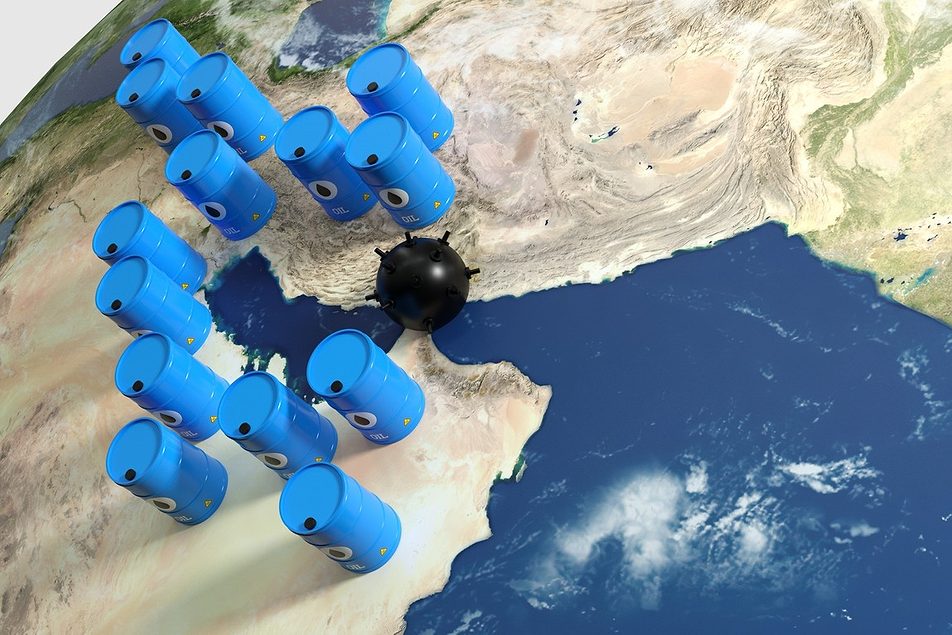
Anyone hoping for an official “open” or “closed” sign at the Strait of Hormuz is going to be disappointed. While a few vessels are slipping through, often close to Iranian waters with their Authentic Identification System (AIS) switched off, it’s far from business as usual. The possibility of mines in the water poses a very real threat and has created a palpable sense of fear.
The rhetoric from U.S. President Donald Trump has only further complicated matters. His 48-hour ultimatum for Iran to either reopen the Strait or face strikes on power plants has expired, although attacks were placed on hold due to “productive discussions,” which Iran insists have not taken place. The markets relaxed for a moment, with the prices of oil dipping, before everyone remembered that postponement is not resolution.
As the U.S. and Iran appear to have reached an impasse, the maritime risk picture remains inherently complex.
The Safety Net of Insurance Cover
One persistent rumor refuses to die: that ships aren’t transiting because war insurance has been pulled or has become unaffordable. Lloyd’s of London has been uncharacteristically blunt on this, stating in no uncertain terms that war risk cover, hull, cargo and liability is still available, as is P&I cover. Premiums can be repriced, but that’s what the system is designed to do.
Ships aren’t moving because of a lack of cover, but rather because their captains, owners, and crews are rightly prioritizing their own safety. Around 20,000 seafarers are currently caught up in this disruption, with the number of fatalities now into double figures. Ships are running low on bunkers and stores; salvage availability is uncertain, and ports of refuge are politically complicated.
This isn’t an insurance problem. It’s a “what happens if things go wrong and no one comes?” problem.
Uncertainty Is the Only Certainty
The Joint Maritime Information Center hasn’t helped to restore confidence, maintaining a critical threat level and describing a pattern of attacks that looks deliberately non-selective. The idea that flying a “friendly” flag guarantees safety is fictional, especially when Iran’s own leadership has hinted that parts of its military may operate with a degree of independence. In a war, chains of command are rarely clear cut.
Western leaders are deeply nervous about being dragged into a conflict by Washington’s deadlines. Israel’s campaign looking increasingly unconstrained doesn’t help matters — it’s shrinking diplomatic off-ramps and increasing escalation risk. While military force may secure shipping lanes, logistics still has to feed, fuel, repair and evacuate whatever force is doing the securing.
This brings us to the popular suggestion that keeps resurfacing: “Just bypass Hormuz and send trucks across Oman.” This is by no means a viable solution, however.
A very large crude carrier (VLCC) carries about two million barrels of oil. A truck carries about 200. One tanker, therefore, equals roughly 10,000 trucks. At Gulf scale, that’s tens of thousands of trucks per day, every day, across borders, deserts and infrastructure that was never designed for it.
Then there’s cost. Pipelines and ships move a barrel for $1 to $2. Trucks do it for $9 to $30. At that point, you’re not bypassing a chokepoint, you’re reinventing inflation. That’s why the only alternatives that actually matter are boring, expensive and pre-built.
The UAE is quietly routing flows via Fujairah. Saudi Arabia is pushing its east-west ambition, not just to export but to become a transit system between seas. This is much more than rerouting — these are strong contingency plans, which typically get formulated years in advance.
Where does that leave us? While the Strait of Hormuz isn’t wholly closed, it certainly isn’t open for business. The Strait is selectively usable, politically conditional, operationally fragile and psychologically exhausting. While insurance is a viable option, there’s a dearth of confidence.
Bypassing Hormuz was never about finding a clever detour. It’s about redesigning how energy and trade move at scale. Infrastructure moves cargo. Systems move markets. And right now, the system is showing that it was never built to withstand these sorts of shocks.
Karin Strom is vice president, logistics and supply chain at Proxima.