
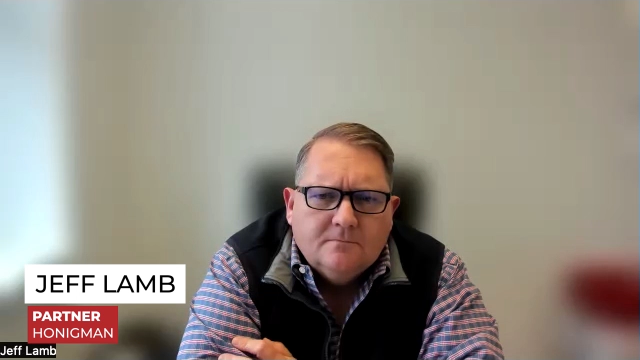
Jeff Lamb, partner at the Honigman law firm, explains how automotive suppliers and OEMs are faring in the wake of cancellation of tariffs imposed under the International Emergency Economic Powers Act (IEEPA).
Automotive original equipment manufacturers and suppliers maintain a highly complex, multinational supply chain, with parts likely to cross borders multiple times prior to final assembly. As a result, they’ve been significant payers of the tariffs imposed by President Trump last April, and many stand to receive substantial refunds now that the U.S. Supreme Court has invalidated those fees.
The problem, notes Lamb, is that the refund process remains “ambiguous,” as Customs and Border Protection labors to develop a system for managing the massive payouts that have been ordered by the Court. With that in mind, he says, companies need to be “very diligent about taking steps to preserve their rights to receive those refunds once the process is in place.”
The state of limbo in which automotive manufacturers currently exist is complicating contract negotiations between supply chain partners. The parties must be able to detail all of the points at which they became subject to tariffs over the past year, keeping in mind that commercial relations vary widely in content and scope. “No one size fits all.”
Suppliers, which tend to operate under thinner profit margins than OEMs, find themselves under particular financial stress as CBP works out how it’s going to comply with the ruling by the Supreme Court and subsequent order by the Court of International Trade. The challenge lies in figuring out how to apportion the refunds among all of the parties that sustained higher costs due to the tariffs — even consumers, some of whom have already launched class actions to be reimbursed for the extra costs charged by sellers.
Automotive companies need to be “laser-focused” on monitoring the Administration’s tariff policy, while tracking the amount of tariffs they’ve paid and precisely where they stand to be reimbursed, Lamb says.