
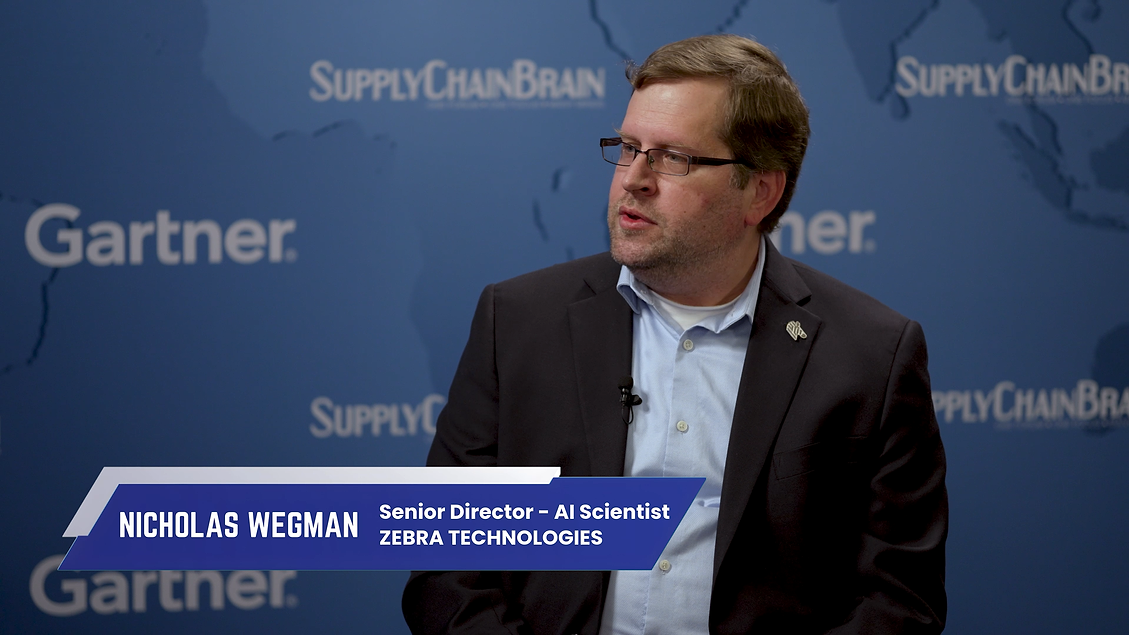
Successfully deploying artificial intelligence in supply chain planning is an ongoing process, according to Nicholas Wegman, senior director and AI scientist with Zebra Technologies. “Implementation does not equal success,” he says.
Companies might leap at the chance to adopt AI in their organizations, building models and running optimization algorithms — but if they don’t follow through on the recommendations outputted by the AI model, they’ll never realize the technology’s potential, Wegman says. “You won’t get the promised ROI.”
The problem in many cases is that new users don’t trust the AI’s conclusions, falling back on spreadsheets and manual processes. Part of the reason for that behavior is a natural aversion to change. But it’s also based on fear of job loss.
“People start to think, ‘Am I going to get fired?’” Wegman says. “That’s a little short-sighted. These tools are here to stay, and companies need them to be successful.”
Human roles are going to change, and companies needed to manage that transition by keeping employees in the loop about how it’s going to play out. Proper change management involves “bringing them along with the journey the whole way,” Wegman says.
But what if the organization doesn’t know exactly what form that change will take? Until relatively recently, few could have predicted what shape AI would be taking today. Similarly, they have little sense of how it will evolve in years to come. Therefore, companies adopting AI need to start small, Wegman says. “Don’t rip everything out tomorrow.” Along the way, make sure that the technology is delivering on its promise.
It’s just as important to ensure the quality of the data that’s going into the AI engine, Wegman says, citing the “garbage-in, garbage-out” mantra of technology experts.