
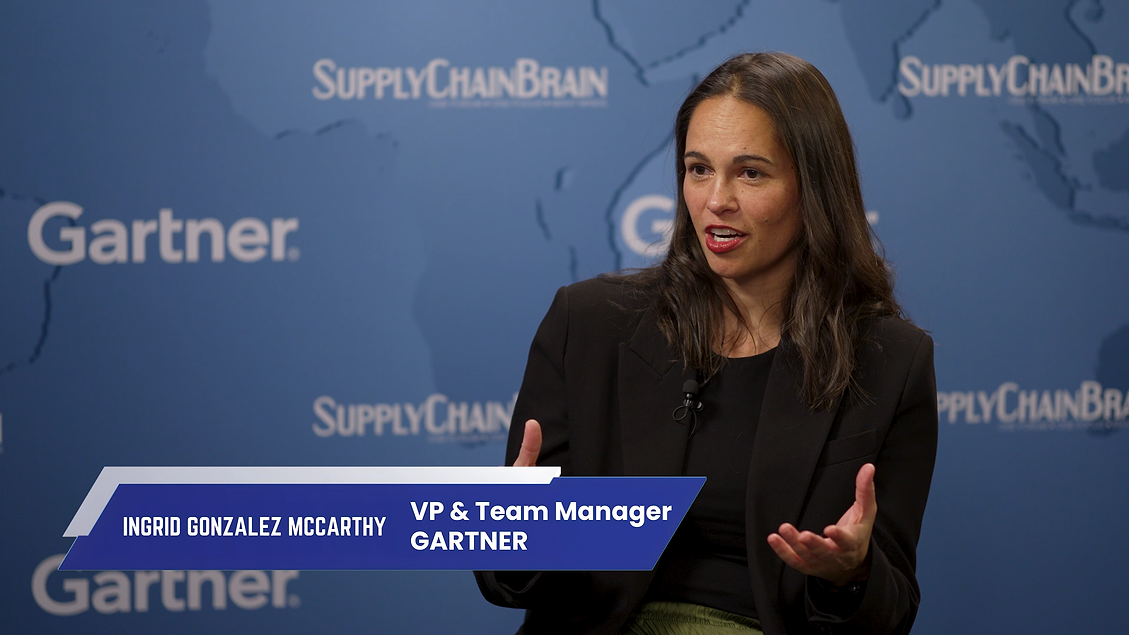
Sales and operations planning has been a common business practice for years, but it has evolved over that time to cope with an increasingly complex world, says Ingrid Gonzalez McCarthy, vice president and team member with Gartner.
While S&OP can be viewed as something of a legacy application, the way it’s deployed today differs from in the past, McCarthy says. In S&OP’s early days, organizations weren’t necessarily connected with supply chain partners, countries and markets. “Now,” she says, “everything is connected.” Gone are the days of linear supply chains, with businesses today looking to focus on where decisions actually need to be taken, whether globally or regionally.
Many companies have yet to adapt to this new way of decision-making, Gonzalez McCarthy says. What hasn’t changed, though, is supply chain complexity. Surveys of businesses taken in both 2018 and 2024 find that concern among the top three challenges cited by respondents. “Complexity will never go away,” she says.
Traditional considerations of demand and supply remain, but what’s “dragging down” many organizations today is a lack of proper governance. “You have to make sure you’re focusing on the right metrics,” Gonzalez McCarthy says. And that means paying attention not just to outcomes, but also to the underlying processes that ultimately control them.
Rather than come up with a single number for demand in an S&OP exercise, companies need to generate multiple “what-if” scenarios, then decide which one to adopt based on current conditions in the marketplace.
At the same time, she says, organizations must be cognizant of the need to address both short- and long-term planning horizons. Even the best-laid plans must be constantly adjusted at the execution level.