
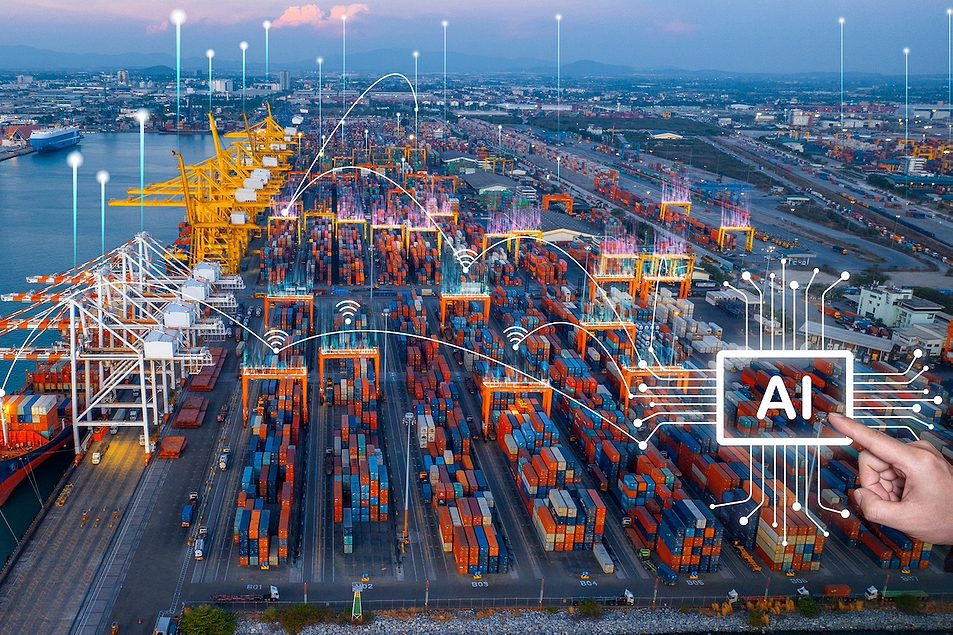
In 2026, frontline and central planning teams will not just use AI occasionally; they will work alongside it every day. Think less “optimization module buried in an ERP” and more hyper-personalized co-pilot that understands each planner’s portfolio, constraints, and KPIs across demand, inventory, production and logistics.
Traditional supply chain systems have promised end-to-end visibility and self-service analytics for years, but the experience has often been clunky and backward-looking. AI’s capability to act as a co-pilot fundamentally changes this dynamic in three critical ways.
First, it interprets context by knowing who the user is — whether a demand planner, production scheduler, buyer or logistics coordinator — along with which products and locations they own, current service levels, constraints, and live exceptions in their book of business. Second, it tailors responses by providing recommendations and actions specific to that node, lane, SKU or customer rather than serving up generic dashboards or static reports. Third, it proactively assists by surfacing exception alerts, risk signals, suggested orders, allocation moves and what-if scenarios before the planner goes searching.
For supply chain leaders, this will feel like having a digital team of planners, analysts and coordinators “riding along” with human teams, handling routine analysis, monitoring and transactions at scale so humans can focus on judgment calls and collaboration.
Every stage of the end-to-end supply chain lifecycle stands to be reshaped by this AI-enabled evolution. Across demand planning, production execution, procurement and support operations, the possibilities are transformative.
In demand, supply and inventory planning, the experience will be fundamentally different. Planners will ask natural-language questions such as “Where am I most likely to stock out next quarter?” or “Which customers will be impacted if this supplier slips by two weeks?” and receive instant, context-aware answers. AI will personalize planning workflows, adjusting views, alerts and recommendations based on product criticality, variability, lead times and planner preferences. Beyond reactive responses, planners and leaders will receive tailored prompts on how to rebalance inventory, adjust safety stocks or rephase purchase orders, all based on live risk and opportunity signals that emerge continuously.
Production scheduling and shop-floor execution will likewise undergo significant change. Schedulers will be able to request: “Build me a feasible schedule that protects on-time delivery while minimizing changeovers and overtime” and iteratively refine scenarios with AI in minutes rather than hours. The AI will continuously monitor machine performance, material availability and labor plans, flagging emerging bottlenecks and proposing reschedules or alternative routings before problems cascade. Supervisors will receive role-specific nudges on when to reassign crews, approve overtime or trigger maintenance to protect throughput and service, enabling faster decision-making at the point of impact.
Procurement, supplier management and logistics capabilities will be equally transformed. Buyers will interact with AI that can answer detailed questions about supplier performance, risk exposure, contract terms and alternative sources when disruption hits. Procurement teams will use AI to scan for non-obvious suppliers, detect demand-supply imbalances early and personalize outreach and collaboration at scale. Internally, AI will suggest optimal carrier choices, mode shifts, consolidation opportunities and rerouting options based on cost-to-serve, service commitments and constraints, optimizing transportation decisions in real time.
Beyond these operational domains, AI will reshape how policy, playbooks and operations support function. Instead of digging through SOP binders or pinging the center of excellence, planners will simply ask: “What is our escalation playbook if this Tier-1 supplier goes offline?” or “Can I expedite this shipment and stay within the customer’s margin threshold?” and receive precise, policy-aligned guidance instantly. Repetitive, low-value traffic into central planning, analytics and support mailboxes will be dramatically reduced, as AI handles the bulk of standard questions and routine analysis, with clear guardrails protecting against misuse.
As AI takes over routine, transactional and monitoring work, supply chain’s role becomes more intentionally strategic and collaborative with the business. Leaders will gain more time to partner on network design, portfolio strategy, S&OP/IBP, resilience, sustainability and customer experience, along with more capacity to experiment, measure and refine operating models. The key challenge, however, is not whether AI can do this — it clearly can — but whether supply chain organizations are ready to design, govern and continually improve these experiences in ways that are ethical, transparent, explainable and trusted by operators, customers and partners. The winners will treat this as a new management system, not just a new tool.
Alongside the expert constantly at your side comes a more profound shift: AI capability becoming a core performance differentiator in supply chain roles. By 2026, high performers will increasingly be those who know how to get the best from AI, not just those who can work hard without it. This evolution is already visible in the rise of the “AI-native” supply chain professional. This does not necessarily mean data scientists or engineers. It means planners, buyers, schedulers, logistics and customer service representatives who see AI as a partner, not a threat or a shiny gadget.
These AI-native employees share common characteristics. They quickly adopt new decision-support tools, test them and integrate them into daily workflows across planning cycles, exception management and collaboration. They understand enough about how AI and optimization work — including their limits — to use them responsibly, challenge recommendations and apply domain judgment when needed. They know when to ask, how to ask and, critically, when not to trust the answer because data is incomplete, assumptions are wrong or a customer nuance is missing.
Over time, AI capability will move from niche expertise to baseline literacy, on par with digital and data fluency. Supply chain leaders will be expected to help the organization build layered capability ranging from basic AI co-pilot usage, to power-user workflows, to governance and continuous improvement. These skills will increasingly show up in job descriptions, interview questions and performance criteria for planners, managers and leaders across all functions.
In 2026, supply chain functions should prepare now for an era of AI human-machine teams running core planning and execution cycles together. In the coming year, AI will not replace supply chain teams, but supply chain teams that fail to harness AI will struggle to keep pace with volatility, customer expectations and margin pressure. The future belongs to operations teams that embrace a true partnership with AI and do their best work as human-machine teams, combining machine speed and pattern recognition with human judgment, creativity and relationships.
Stephen Hutson is CTO of A2go.ai.