
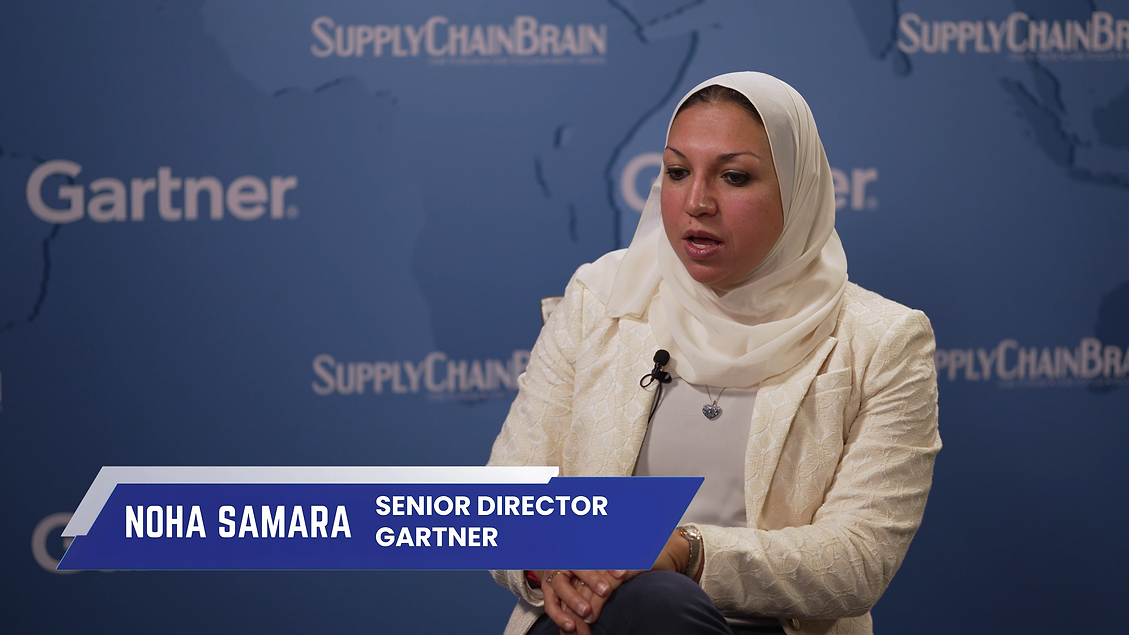
How can the planning organization become the “decision shaper” of the end-to-end supply chain? Noha Samara, senior director of Gartner and chair of the firm’s Supply Chain Planning Summit for 2025 and 2026, explains.
Organizations that made Gartner’s “Top 25” list for 2025 exhibited three tendencies on the planning side, Samara says: connecting end-to-data to achieve critical insights into their supply chains, achieving agility through automation, and “deliberately” defining the role of artificial intelligence in the business.
“End-to-end” is a vague and often overused term, but Samara says it carries real meaning when planners collaborate with suppliers and customers to build and share multiple scenarios of what could happen. “It’s a two-way conversation,” she says, “not just about getting numbers and acting upon them, but together [seeing] what the plan could look like.”
Most companies are deploying automation to handle routine tasks, Samara says, but the innovators are focusing on where technology can drive “real value” in their supply chains.
Artificial intelligence can be of particular value, but only if it’s linked to understanding the return on investment and specific areas where it can be most effectively used. AI must be more than “an experiment on the side of planning,” Samara says, adding that companies need to devise “a clear human-machine strategy.”
Planning today “is the core of decision-making in any organization,” Samara says. The supply chain planning team needs to evolve to become the “code breakers” who turn data into insight. What’s more, they need to possess the right “storytelling” skills to drive corporation strategy across the business.