
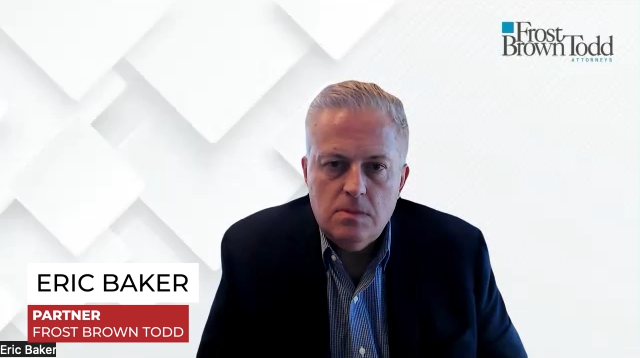
A look at the complexities of nearshoring, with Eric Baker, partner in the Private Equity & Venture Practice of the law firm of Frost Brown Todd, and head of its Supply Chain group.
The benefits of bringing manufacturing for U.S. markets back to the western hemisphere — specifically, Mexico, Central America and Canada — have been well-publicized. But for companies looking to make that move, there are complications that must be taken into account, Baker says.
Moves by manufacturers toward nearshoring began gaining momentum in the 2000s for multiple reasons, including the rising cost of factory labor in China, and high logistics expenses resulting from maintaining long supply lines. But the imposition of tariffs by the Trump Administration changed the discussion. Suddenly, importers were faced with a new financial burden, depending on where they were sourcing their goods. And that sparked even greater interest in nearshoring.
Mexico was a particular beneficiary of initial nearshoring efforts. Turns out, however, that Mexico carried its own set of costs and risks, arising from culture issues, the threat of cargo theft and violence, and resulting difficulties in obtaining insurance. And goods from Mexico also became subject to tariffs, running as high as 35% to 40% on finished products. “Fast-forward to 2025,” Baker says, “and now the economic model that was original driving nearshoring begins to change significantly.”
The ultimate decision on nearshoring involves “a lot of moving parts,” says Baker. “It can get complex fairly quickly,” requiring a more in-depth review of the options involved in sourcing decisions.
In deciding whether the stability tradeoff is worth it, companies need to take a fresh look at their contracts with suppliers, transportation providers, wholesalers and distributors, Baker says. They need to incorporate language into those contracts that allows for the shifting of cost burdens among supply chain partners, to mitigate the economic impact on importers.